<p> </p>
<p><span style="color:rgb(33, 1, 0); font-family:georgia,serif; font-size:16px">Radiography Testing (RT) is used to perform inspections that detect internal discontinuities in all material types, and can be an option for both field and shop work. RT is predominantly used for weld inspection or the testing of castings and forgings using one of two source types, X-ray or Gamma ray (Isotope) radiation.</span><br />
<br />
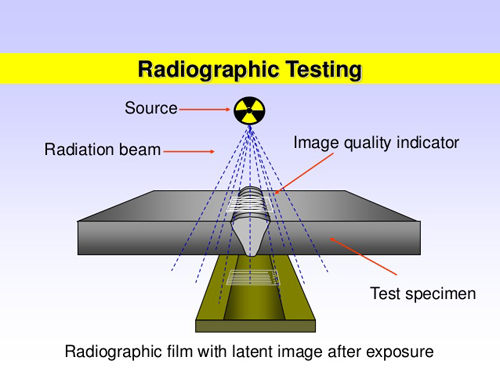
<span style="color:rgb(33, 1, 0); font-family:georgia,serif; font-size:16px">Radiography-TestingUsing radiography, the part is exposed to the source while a film is positioned behind the part to be inspected. The film is then developed and is reminiscent of a film negative. Based on the actual indications on the film and density differences a determination can be made regarding the size and orientation of imperfections within the material as well as the their location relative to the weld. We are then in a position to determine whether or not the defect passes or fails based on the accept/reject criteria within the codes.</span></p>
<p> </p>
<p> </p>
Minimum Batch Order1 Units
Sample Unit Price₹ 500 / Sample
Technical Specifications
<p> </p>
<p><span style="color:rgb(33, 1, 0); font-family:georgia,serif; font-size:16px">Radiography Testing (RT) is used to perform inspections that detect internal discontinuities in all material types, and can be an option for both field and shop work. RT is predominantly used for weld inspection or the testing of castings and forgings using one of two source types, X-ray or Gamma ray (Isotope) radiation.</span><br />
<br />
<span style="color:rgb(33, 1, 0); font-family:georgia,serif; font-size:16px">Radiography-TestingUsing radiography, the part is exposed to the source while a film is positioned behind the part to be inspected. The film is then developed and is reminiscent of a film negative. Based on the actual indications on the film and density differences a determination can be made regarding the size and orientation of imperfections within the material as well as the their location relative to the weld. We are then in a position to determine whether or not the defect passes or fails based on the accept/reject criteria within the codes.</span></p>
<p> </p>
<p> </p>