<p> </p>
<p><span style="color:rgb(33, 1, 0); font-family:georgia,serif; font-size:16px">This process used for detecting surface and slightly subsurface discontinuities in ferroelectric materials such as iron, nickel, cobalt, and some of their alloys. The process puts a magnetic field into the part.</span><br />
<br />
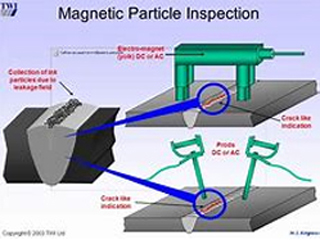
<span style="color:rgb(33, 1, 0); font-family:georgia,serif; font-size:16px">The reason we use this test is to find small defects in objects before they become bigger defects and cause serious problems. In magnetic particle inspection, a magnet or electrical current is used to establish a magnetic field in the object. Iron filings are then dusted on to the surface of the object. The filings should align along the magnetic lines of force. If a crack or other defect is present, the magnetic lines of force will be disrupted and the magnetic particles will cluster along the edges of the flaw.</span></p>
Minimum Batch Order
1 Units
Sample Unit Price₹ 500 / Sample
Technical Specifications
<p> </p>
<p><span style="color:rgb(33, 1, 0); font-family:georgia,serif; font-size:16px">This process used for detecting surface and slightly subsurface discontinuities in ferroelectric materials such as iron, nickel, cobalt, and some of their alloys. The process puts a magnetic field into the part.</span><br />
<br />
<span style="color:rgb(33, 1, 0); font-family:georgia,serif; font-size:16px">The reason we use this test is to find small defects in objects before they become bigger defects and cause serious problems. In magnetic particle inspection, a magnet or electrical current is used to establish a magnetic field in the object. Iron filings are then dusted on to the surface of the object. The filings should align along the magnetic lines of force. If a crack or other defect is present, the magnetic lines of force will be disrupted and the magnetic particles will cluster along the edges of the flaw.</span></p>